IWho this is for
Commissions come from people who already know the atmosphere they want and need someone who can actually build it. The work is scored to picture, from the story outwards — not selected from a library and trimmed to length.
- 01
Directors and producers
Horror, thriller, folk horror, body horror, supernatural, dark sci-fi: a score with themes, tension architecture, and the confidence to leave space where silence does more than music.
- 02
Game creators
Dread built into interactive space: loops, layers, intensity states and stingers that behave under the player's hands rather than only on a timeline. Game scoring for horror and dark narrative projects.
- 03
Sound design and post teams
Designed horror sound that sits in the same palette as the score: bowed metal, waterphone, struck objects, processed voice, low-end pressure, transitions. Cinematic sound design.
- 04
Experimental, documentary and gallery work
Pieces where sound carries the argument: art film, installation, unusual documentary, audio drama, high-concept shorts. Send the brief even if the format has no template yet.
IIWhat you can commission
Three ways in, one working method: written to your picture, your runtime, and your delivery spec.
- 01
Original score, written to picture
Themes, motifs, cues, tension architecture and negative space — spotted scene by scene against your cut. Hybrid orchestral, electronic, experimental or all three, depending on what the film believes about itself.
- 02
Cinematic sound design
Designed dread as a layer of its own: source recordings, bowed and struck metal, waterphone, breath and voice, sub-bass pressure, transitions and stingers that live in the score's world.
- 03
Interactive and adaptive sound
Loops, layered stems and intensity states prepared for your engine and your audio lead, with implementation notes that a programmer can actually work from.
Also available on request: trailer and teaser cuts, alternate and clean mixes, cue-sheet-ready delivery, and licensing of existing catalogue material when a commission is not the right fit. Licensing, rights and credits · the catalogue.
IIIHow a commission runs
Five stages, no surprises. The cheapest place to change your mind is stage two.
- Inquiry. You send the brief — format, runtime, tone, references, deadline, and what you can realistically spend. You get a real reply with questions or a first read, not a pitch deck. Open a scoring inquiry.
- Spotting. We watch the cut together or you send timecoded notes, and we decide where music earns its place — and where it should not. Spotting is where money is saved. How spotting works.
- Direction. A short sample cue or two, so you hear the world before the whole score is built. Nothing is committed to the full runtime until the direction is agreed.
- Score and design. Cues written to picture, revisions in rounds, sound design built in the same palette where the project wants it. Revision policy.
- Delivery. Full mix, stems, alternate and clean versions, timecode-matched cues, cue-sheet metadata — in the formats your edit and dub stage actually need. What delivery includes.
IVWhat lands in your edit
Every commission ships as a usable package, not a folder of rough bounces.
- Stereo full mix of every cue, mastered for picture, with the dialogue sitting forward.
- Stem families — dialogue-safe music, ambience and atmosphere, designed elements, low-end pressure — named and timecode-aligned.
- Alternate and clean versions where the edit or the trailer needs a shortened, instrumental or stinger-only pass.
- Timecode-matched cues against your picture-locked export, so nothing has to be nudged on the dub stage.
- Cue sheet metadata — cue titles, durations, use type — prepared for the production's filing. Cue sheets and performing rights.
If your spec is unusual — surround, immersive, stems at 16+ families, a specific sample rate — say so at inquiry and it is written into the quote rather than discovered late.
VProof, not adjectives
- 01
32 original cues
Psychological dread, tension stingers, thriller propulsion, dark ambient beds, body horror, cosmic horror — the library the scores are drawn from, playable in the browser.
- 02
Nine productions scored
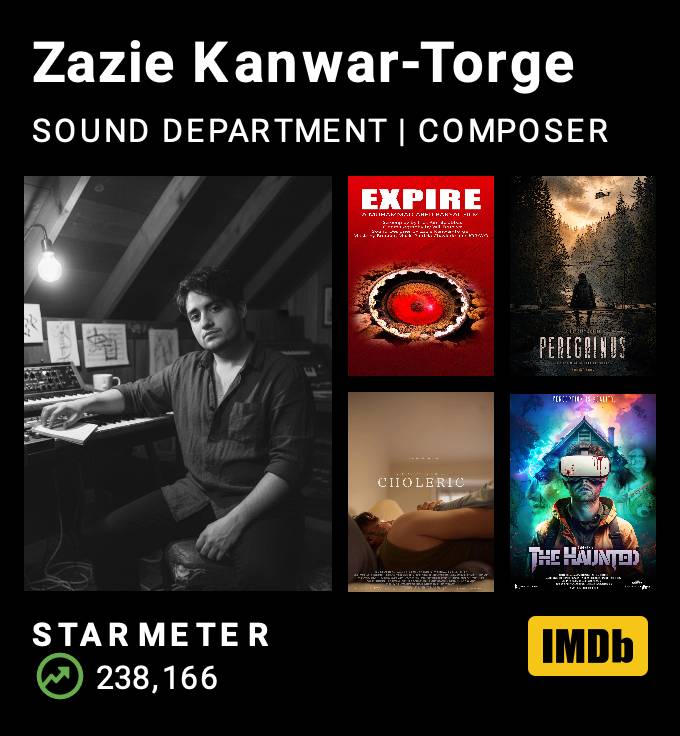
EXPIRE, UNSEEN, PEREGRINUS, Phantom Requiem, ECLIPSED, THE HAUNTED, CHOLERIC, MIKE HAS A VISITOR, THE DARK AWAITS.
- 03
Film samples in context
Eight samples where the score is heard inside the cut, not on a clean timeline.
- 04
Credited, verifiable work
IMDb-credited composer, released records and sound libraries under the studio's own name, and a Winter 2024 award recognition on the press page. See the composer biography and the press kit.
VIWhat it costs
Not a flat fee, and not a mystery. A quote is built from your project's funding first, then shaped by scored runtime, cue density, live players, delivery complexity, timeline and rights. Most projects land in the few-hundred-dollar range, scaled to what the production actually has.
Read the full rate card and what moves the number, or the fees FAQ. If you have a number in mind, put it in the inquiry — a disclosed budget produces a usable answer rather than a guess.
VIINot ready for a custom score?
If the deadline is this week, or the budget is one track rather than a score, licence existing material instead of commissioning. The catalogue holds records, sound libraries and score material, and licensing terms are written down rather than negotiated by vibe. Prefer to hear it first? Play the showreel.
VIIIQuestions before you commit
Do you only score horror?
Horror is the centre of gravity — psychological, folk, body, supernatural and cosmic — but the same palette scores thrillers, dark science fiction, experimental documentary and art-film work. Genre flexibility is part of the practice, not a compromise on it.
How long does a score take?
A short typically runs two to three weeks from spotting; a feature or a series episode four to eight weeks, depending on runtime and how much of it is scored. Rush scheduling is possible and is priced as such. What shapes the timeline.
Can you work to my temp track?
Yes — temp as a reference for function, not as a template to imitate. Send the temp and a sentence about what it is doing for you, and the score will do that job in its own language.
What do you need from me to quote?
Five things: format and runtime, a rough cut or scene list, tone references, your deadline, and the budget you can genuinely spend. Everything else can be worked out in the first reply. What to send.
Who owns the music?
The default grant for a commissioned score is a buyout on final payment, with authorship retained and credit written into the agreement; alternatives exist for festival, broadcast, album and sync use. The default grant · Licence options.
My budget is very small. Should I still write?
Yes. Quotes are built on a sliding scale tied to your project funding, and a licensing route can cost less than a commission. The honest answer to a small budget is a real scope, not silence. Rates and what moves the number.
IXStart an inquiry
Send five things — format, runtime, references, deadline, budget — and you will get a real reply, usually within 48 hours.
Hear the work first? Play the 32-cue showreel · See selected productions · Check rates